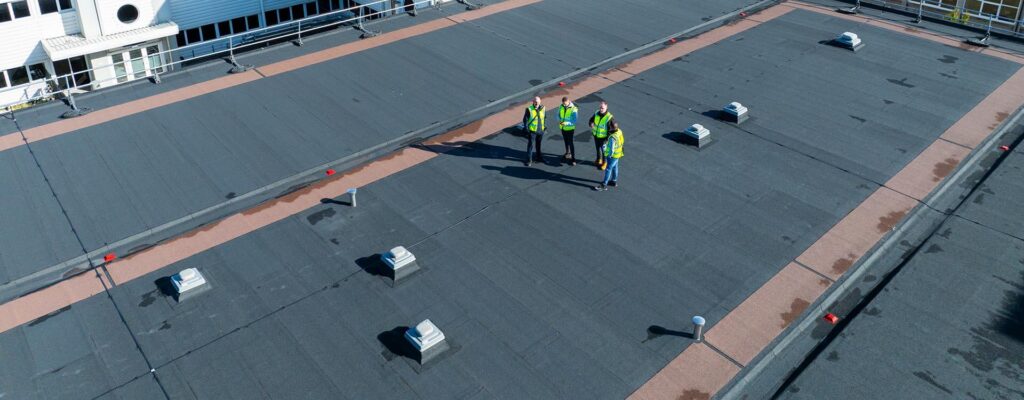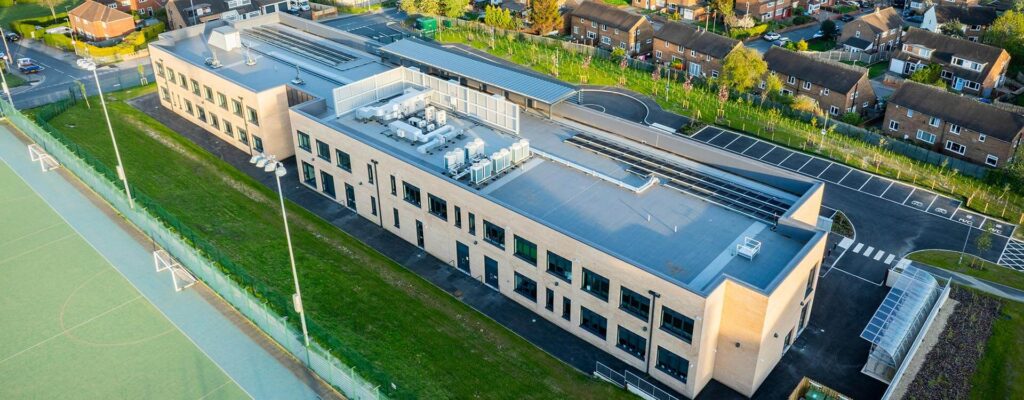
Construction programmes rarely fail because of one issue. More often, pressure builds through a series of small delays: a late approval, a weather window missed, a substrate not quite ready, a trade unable to start when planned.
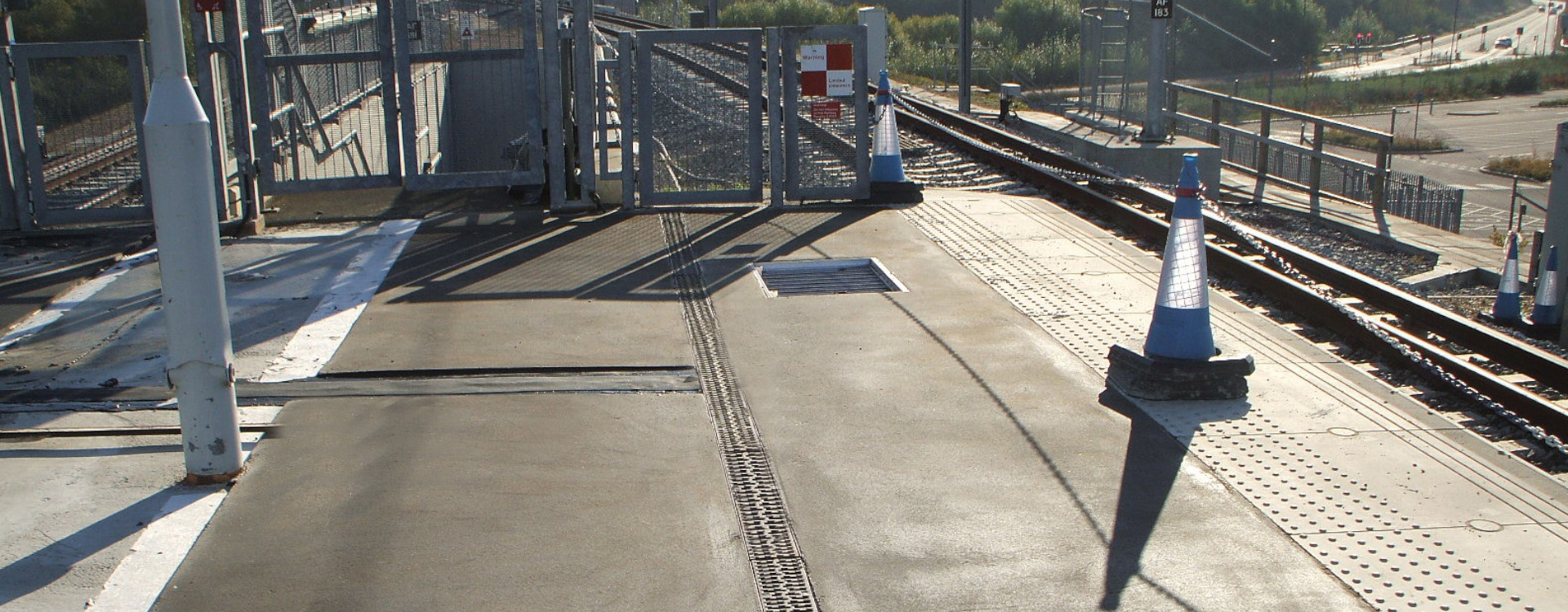
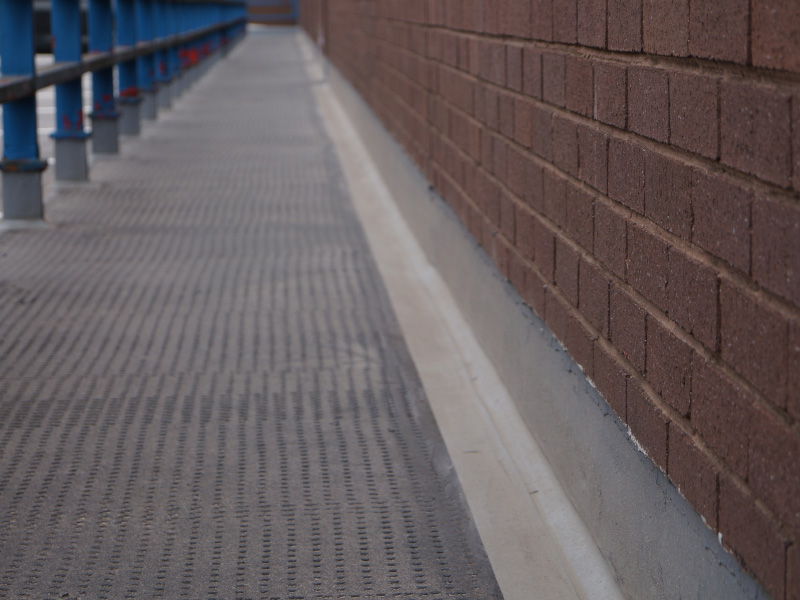
On roof, terrace, balcony, walkway and podium projects, the screed layer can be one of those pressure points.
It may not be the most visible part of the build-up, but it can determine when waterproofing starts, when follow-on trades gain access and how quickly the next phase can move forward. Where traditional screeds require extended curing or drying time, the programme can be left waiting at a point when the project team needs momentum.
In a market where financial constraints and planning and regulatory issues remain key impediments to construction activity, avoidable waiting time on site is becoming harder to absorb. RICS’ Q3 2025 UK Construction Monitor reported financial constraints and planning and regulatory issues as the most frequently cited challenges, highlighted by 61% and 62% of respondents respectively.
The delay is not always in the installation
When project teams look at programme risk, they often focus on the time it takes to install a material. That is only part of the picture.
The more important question is: when can the next trade start?
A screed may be installed quickly, but if it then needs time to cure, dry or reach the required condition before waterproofing can begin, the programme remains exposed. On a live refurbishment, phased commercial project or public estate scheme, that waiting time can affect access, sequencing and stakeholder confidence.
This is why the screed stage should be considered as part of the wider roof or deck programme, not as a standalone material decision.
Three programme questions worth asking early
Before the screed is specified, it is useful to test it against the realities of the project.
1. How soon does waterproofing need to start?
If the waterproofing package is dependent on the screed reaching the right condition, curing time becomes a programme issue. IKO Permascreed LI sets as it cools and is open to foot traffic once cooled, typically within 1 to 2 hours, subject to site conditions and technical requirements.
That can help reduce the gap between screeding and follow-on work, particularly where the roof or deck needs to be made ready for waterproofing quickly.
2. How exposed is the work area?
Roof and deck works are often carried out in exposed conditions. Cold, wet or changeable weather can make traditional wet trade sequencing harder to manage. IKO Permascreed LI is not dependent on water-based curing. IKO Permascreed LI can be installed all year round.
3. Is the screed adding avoidable weight or thickness?
Build-up depth and loading can influence structural design, detailing and refurbishment feasibility. Where a roof or deck has existing constraints, the screed should be considered in the context of the whole build-up.
IKO Permascreed LI can be installed in a wide thickness range and in multiple layers where needed to achieve drainage falls or surface levels. IKO Permascreed LI can be installed at a reduced thickness and weight compared with traditional concrete and sand and cement screeds.
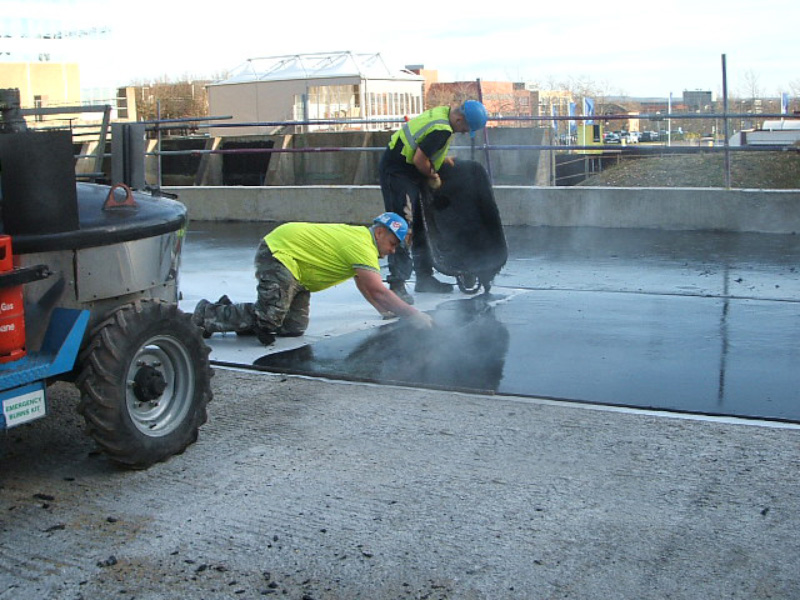
Where IKO Permascreed LI can help reduce programme pressure
IKO Permascreed LI is a mastic asphalt screed designed to create drainage falls, level uneven substrates and provide a stable base for specified roof waterproofing and deck surfacing systems. It is suitable for new build and refurbishment projects and can be used across flat roof and deck applications.
Its role is not simply to be “fast”. Its value is in helping project teams avoid unnecessary pauses between stages.
That can be particularly useful where:
- A roof needs to be made ready for waterproofing quickly
- A live building needs disruption kept under control
- Winter or exposed works create programme uncertainty
- Uneven substrates, back falls or deflections need correction
- Build-up weight and thickness need to be managed
- Embodied carbon information is being considered as part of the specification
Water content and drying time
Traditional wet screeds rely on water as part of the mix, which then must be managed through curing and drying. That can affect sequencing, especially on exposed roof and deck areas.
IKO Permascreed LI contains zero water in the finished product and has no curing requirement. By avoiding water as a constituent material, the formulation is consistent with the wider move towards improved water-use efficiency across sectors and greater resource efficiency in new construction.
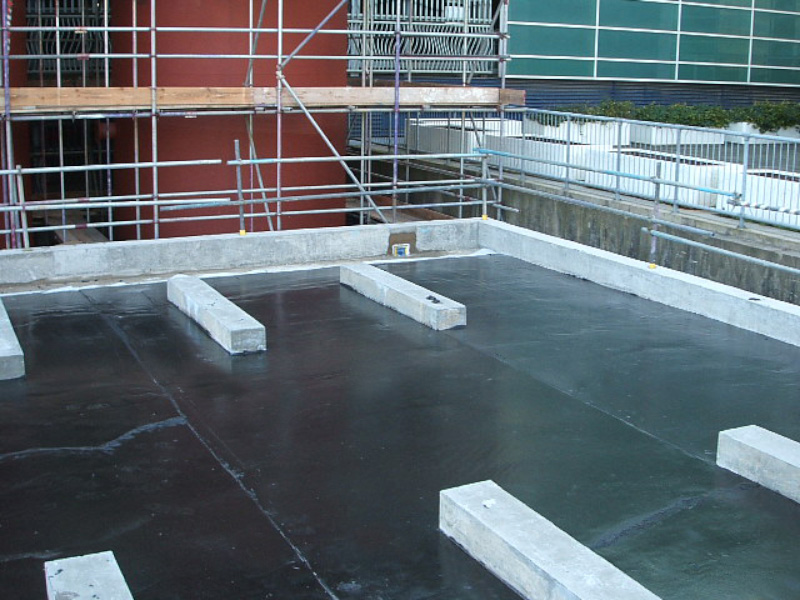
Embodied carbon without overclaiming
Programme certainty is not the only consideration. As project teams look more closely at embodied carbon, the screed layer also needs to be supported by clear and comparable information.
IKO Permascreed LI offers up to 38% lower embodied carbon than its predecessor, supported by verified third-party EPD data showing a reduction in Global Warming Potential of up to 73.44kg per tonne.
A more useful definition of speed
Speed on site is not just about how quickly a product is installed. It is about what that speed unlocks.
A screed that can be accessed sooner can help the waterproofing programme progress sooner. A screed that is less dependent on water-based curing can reduce exposure to weather-related uncertainty. A screed that helps correct falls or uneven substrates can support better preparation for the wider roof or deck system.
That is where IKO Permascreed LI can add value: not as a shortcut, but as a way to reduce avoidable waiting time at a critical point in the build-up.
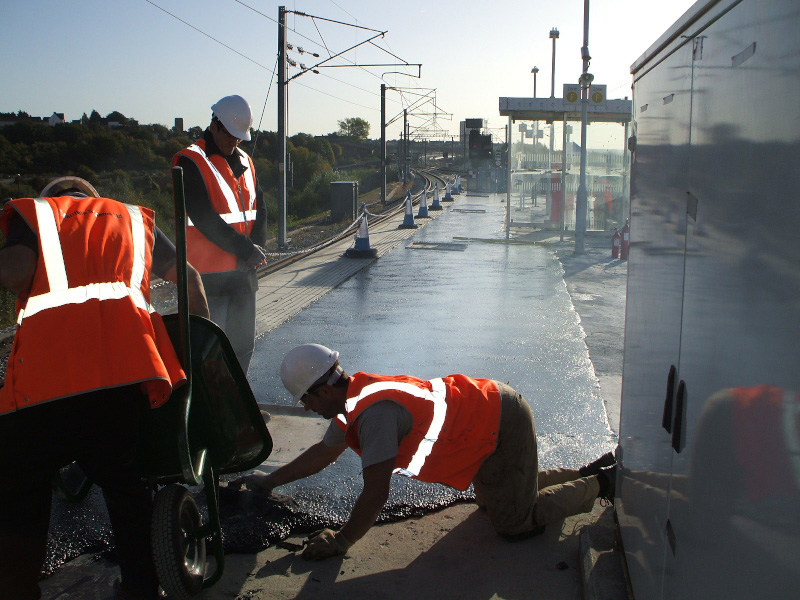
Planning your next roof or deck project
When programme pressure is high, specification decisions can have a significant impact on delivery. The screed layer should be assessed not only by what it does on the day it is installed, but by how it affects the next stage of the project.
IKO Permascreed LI can support faster access, year-round installation, drainage falls, substrate correction and lower embodied carbon compared with the original IKO Permascreed product.
To discuss whether IKO Permascreed LI is suitable for your next roof, terrace, balcony, walkway or podium project, contact IKO for project-specific guidance or download the latest IKO Permascreed LI literature.