For architects and project teams working on education buildings, roofing specification under the Department for Education’s Construction Framework 2025 (CF25) brings together performance, compliance, buildability and long-term considerations within one coordinated design. In this article, originally published by Architecture Today, Ben Parker, Major Projects Manager at IKO, looks at how Section 2.3 can be approached during the design process and explains how the IKO DfE CF25 Compliance Guide supports teams with system selection, technical evidence, performance requirements and project coordination from the earlier RIBA stages onwards.
Ben Parker, Major Projects Manager at IKO, discusses how the company’s DfE Construction Framework Guide can help architects navigate CF25 roofing requirements, reduce specification risk and deliver compliant, high-performance education buildings.
As the Department for Education’s Construction Framework (CF25) reshapes how school buildings are procured and delivered, greater emphasis is being placed on standardisation, compliance and long-term performance. For architects, this brings both clarity and complexity, particularly when it comes to interpreting technical requirements and translating them into robust, buildable specifications.
IKO’s DfE Construction Framework Guide has been developed to support this process, providing a clear, practical route through the framework’s roofing requirements. Ben Parker, Major Projects Manager at IKO, in conversation with Architecture Today’s Technical Editor John Ramshaw, discusses how the guide helps project teams align with CF25, reduce risk and ensure that roofing systems perform as intended from design through to delivery.
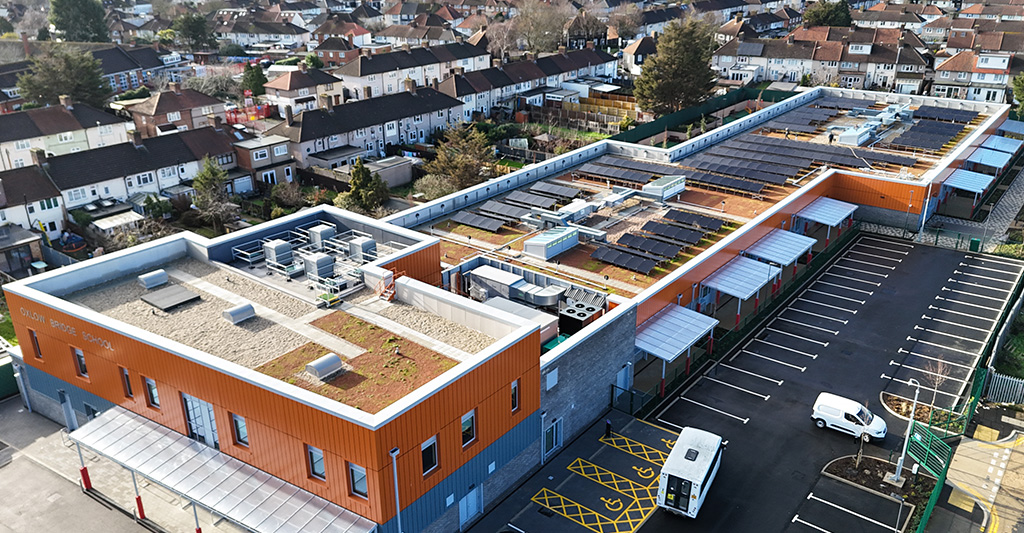
What is IKO’s DfE Construction Framework Guide, and what are you aiming to help architects and project teams achieve through it?
IKO’s DfE CF25 Compliance Guide is a practical design stage tool that brings together the roofing requirements of the framework into a clear, usable format for architects, specifiers and project teams. The aim is to support early decision making and help teams develop roof designs that are compliant, coordinated and robust from the outset.
It focuses on reducing ambiguity around performance, compliance and integration, particularly in areas such as thermal efficiency, moisture control, fire and environmental performance, so projects can be delivered right first time. Importantly, it also helps teams understand how roofing contributes to wider framework targets, including whole-life performance and carbon-related outcomes, which are becoming increasingly central to design decisions.
How does the guide interpret the requirements of CF25, particularly Section 2.3 (Roofs), in a way that is useful at design stage?
Section 2.3 defines the performance requirements for roofs, but it is not structured as a design tool. The guide interprets these requirements into a more usable format by organising them into key design considerations such as drainage, thermal continuity, fire performance, condensation risk, durability, and integration with PV and green roofs.
It also introduces a compliance matrix and system mapping approach, allowing teams to quickly understand how different roof types align with specific clauses. This is particularly valuable at RIBA Stages 2 to 4, where early decisions have the greatest impact on compliance, cost and programme.
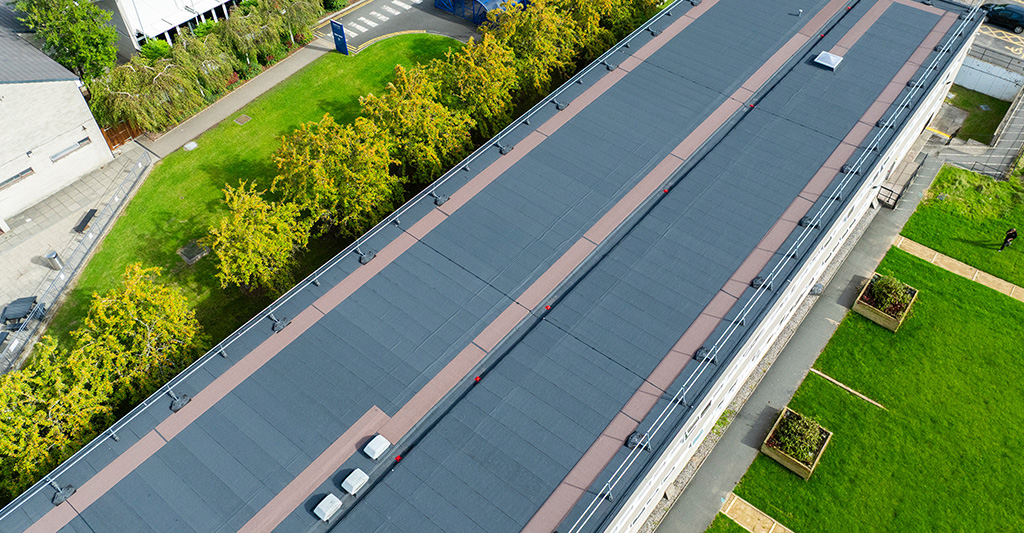
What are the key principles the guide promotes when specifying roofing systems for education buildings?
The guide promotes three key principles:
- Performance-led design, ensuring the roof meets all functional requirements, including thermal, fire, acoustic and moisture performance.
- Long-term durability, prioritising systems that align with the design life of the building and reduce lifecycle intervention.
- Early consideration of whole-life and environmental performance, including embodied carbon, biodiversity, and integration with renewable technologies from the outset.
In education projects, where buildings are expected to perform reliably over decades, this approach reduces risk while supporting the DfE’s sustainability and carbon targets.
How does the guide support a ‘right first time’ approach to design, specification and delivery?
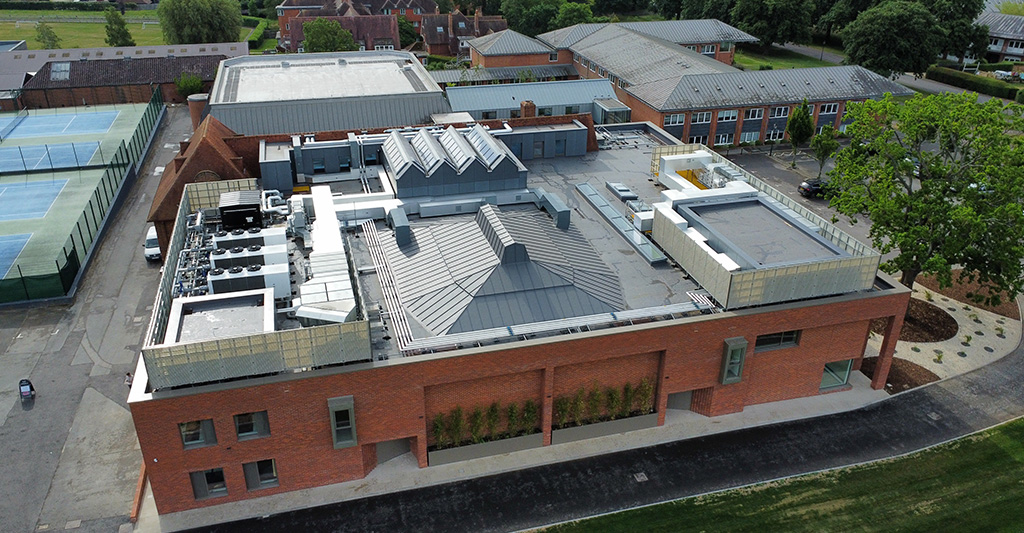
Can you explain the role of the compliance matrix, and how it helps teams navigate CF25 requirements?
How does the guide address critical areas, such as fire safety, thermal and acoustic performance, durability and environmental criteria?
These areas are addressed through a coordinated performance-led approach, comprising:
- Fire safety systems designed to achieve compliance with Approved Document B requirements.
- Thermal performance designs achieving U-values of 0.12 W/m2K and airtightness targets in line with CF25.
- Acoustic performance aligned with BB93, with additional benefits from green roof and bio solar systems.
- Durable systems designed for long service life, supported by BBA certification and robust QA processes.
- Environmental performance, including low-embodied carbon systems, biodiversity enhancements, and renewable integration.
A key part of this is how roofing contributes to the DfE’s embodied carbon targets. Under CF25, the total embodied carbon cap is 550 kgCO2e/m2, alongside a requirement to report and achieve a minimum level of biogenic carbon sequestration of at least 20 kgCO2e/m2. IKO Permatec LI, as well as IKO’s other roofing systems, can be assessed as part of that wider calculation, with product-specific data available to support project evaluations Using third-party accredited EPD’s.
As outlined in the guide, IKO Permatec LI delivers very low embodied carbon of around 1.06 kgCO2e/m2 and verified biogenic carbon sequestration of around 0.99 kgCO2e/m2. While small in isolation, this contribution is significant at a system level and demonstrates how even waterproofing layers can play a role in supporting overall building carbon performance, which is often overlooked at design stage.
In what ways does the guide support compliance with the Building Safety Act and the ‘golden thread’ of information across RIBA stages?
It is structured to align directly with RIBA stages and Building Safety Act gateways, ensuring that compliance is both achieved and evidenced throughout the project lifecycle. It supports the golden thread by providing clear, traceable information from early specification through to installation, inspection, and handover, including performance data, site installation records, and maintenance guidance. This supports the golden thread principle by encouraging a more consistent record of design intent, performance requirements, technical decisions, inspection activity and maintenance information.
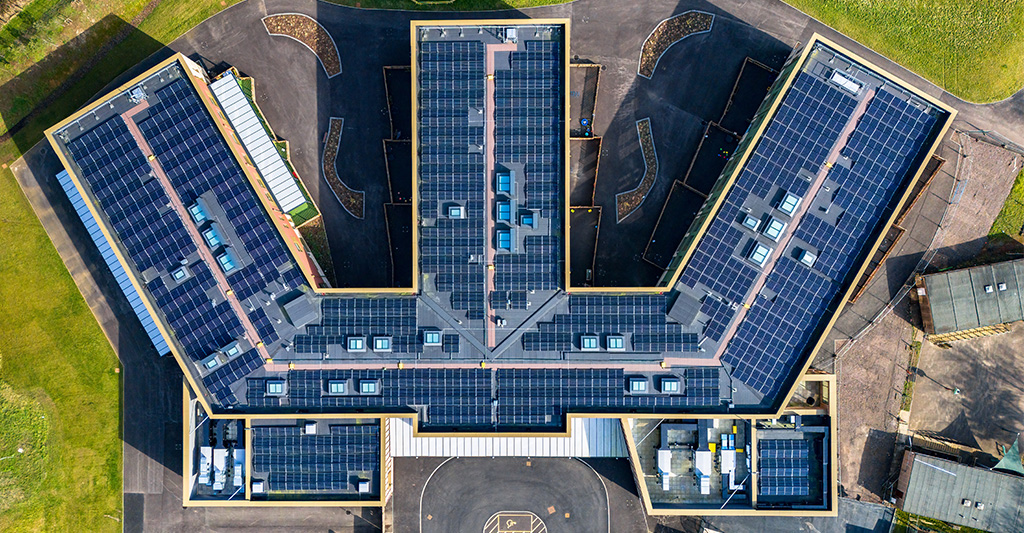
Where do you most commonly see risk or uncertainty arise in DfE roofing specifications, and how does the guide help mitigate this?
Risk most commonly arises at early design stages, particularly where roof build-ups are not fully resolved or where performance requirements are considered in isolation. Typical areas include fire performance of complete system build-ups, integration of PV and green roofs, and misalignment between design intent and installation.
Modular construction needs to be evaluated much more closely if the modules are being constructed off-site. There is also increasing uncertainty around how different elements contribute to embodied carbon targets, particularly where components like waterproofing are often assumed to have a negligible impact. The guide addresses this by providing clear, system-based solutions and by highlighting where even small contributions, such as biogenic carbon within waterproofing, can support wider compliance with DfE carbon targets.
How do IKO’s roofing and waterproofing systems align with the performance requirements set out in CF25?
IKO’s systems are designed to meet or exceed the performance requirements set out in Section 2.3, subject to project-specific design, specification and application. Across reinforced bituminous membranes, hot applied liquid, and single ply systems, this includes design life compliance, thermal performance, achieving required U-values, airtightness targets, external fire performance, and acoustic and environmental compliance. In addition, systems such as IKO Permatec LI contribute to both embodied carbon reduction and biogenic sequestration targets, supporting compliance with the DfE’s broader environmental framework.